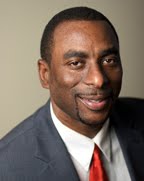
Wednesday, February 16, 2011

Before You Can Say Cat lick Yuh Ears: Urgently Fixing Our Democracy!

A witty parody amidst Egypt’s early rumblings portrays the myopic recalcitrance of dysfunctional systems.  In the satire, President Obama hints President Mubarak should think of leaving. Said Obama “Hosni, it’s time for you to say goodbye.” Mubarak responded: “really, where are the people going?!”  
Yet, almost unbelievably, a dictatorship of 30 years was unlatched and blown away in a mere 18 days; fueled by people armed only with determination. The question that immediately jumps out is: How long will it take to fix diffident socio-political conditions so prevalent in our Islands state? The good news from Egypt to A&B is that we can undo and supplant well entrenched systemic contagions in the twinkling of an eye; yea even before you can say cat lick yuh ears!
I raise this question because of sensed despair.  Keen individuals often feel putrefied Island politics with shabby patterns and immature practices are immutable conditions from which we can never extricate ourselves.  Although these patterns/practices undermine and stymie progress, many resign to accept nihilism and decadence in preference to vision and possibility of brighter better society. Well, whirlwind events in Egypt, of all places, the cradle of tradition, have certainly put a lie to such hopelessness. 
The stark reality is it will not take generations; forever, to dethrone malpractices stifling our democratic flourishing. Will and resolve can bring rapid change. May Egypt’s story inspire us to redress our own democratic dysfunctions with an urgency matching our indigenous folkloric expression- before you can say cat lick yuh ears!
 Of course both situations aren’t the same; any such parallelism immediately yields a tricky question:  Which is easier, transitioning from dictatorship to democracy; or fixing a diseased democracy? 
On one hand, in fixing a democracy the foundation is there; so it’s a matter of appetite for betterment, realigning values, relaying patterns, and altering bad practices. On the other hand, renovations can take longer and cost more than new construction; meaning it’s extremely difficult to unshackle deeply engrained decrepit practices. Still, the lesson out of Egypt is that quickly overcoming severe odds to socio-political improvement is doable once people’s will for betterment is sterling and determined.
In thinking about local democratic institutions and practices, some that are over ripe and crying out for immediate revolutionary attention are:
The Electoral Commission: Even sporting bodies now boast and safeguard respect by ensuring neutral referees officiate. Should any less integrity and sanctity apply to the institution that presides over how we elect those who rule over us? A better way to appoint electoral commissioners must be urgently found. We cannot continue to allow the mice to decide who guards the cheese. 
Political principals will always want trusted lieutenants on the ‘inside’, or even heading the commission; but such arrangements do not belong in a healthy respectable democracy. Satisfying public confidence is more important than appeasing politicians’ fancies. Further, if and when election systems fail, lines must never be blurred (in the public’s mind) between genuine bureaucratic malfunctions and deliberate facilitating of strategic political designs.  
The elections commission must be honestly nonaligned, fiercely unbiased; and sanitized of all and any party activists/loyalists from either side of the divide. Urgent public displeasure should never rest until this critical aspect of democracy is treated with the reverential regard that our democracy deserves. 
The Media & Commentariat:  The role of the media in a credible democracy is public education. The media is not simply to relay messages from politicians; but also to investigate and reveal truth content of those messages. To what extent have media houses in A&B been faithful to their democratic function of educating public insight? Are they sufficiently analytical and exculpatory; or are they victims of the politics? Have they exchanged their role of public educator and become part of propaganda armada on either side? How and from where will objective public insight emerge in order to advance democracy?
And where is the punditocracy, the objective commentariat that fosters evaluation of contending ideas? Where is the forum that says here are the UPP and ALP positions; but as citizens here is how to think about it from an A&B perspective? Where is that voice that walks down the middle; that stands in the gap and speaks for A&B’s interests- without an aligned agenda? 
The intelligentsia appears to be open or shrouded mouthpieces for either side. Perhaps the promised university of A&B will provide more objectively evaluated public policy insight. In the meantime there is urgent need for a strong, objective, compelling revolutionary down the middle forum that forces both sides to improve their acts for the benefit of country.
The Church:  In most democratic jurisdictions churches remain above the political fray; and instead serve as society’s moral conscience.  This allows an efficient spiritual suasion that forces political players to be mindful of moral, ethical and valuative aspects of their conducts and policies. Churches must not and cannot take this function lightly. It is a critical and sacred democratic staple. If however, public concerns appear to attract advocacy or silence from churches based on political color, efficacy of the ecclesiastical voice is severely compromised. 
Have churches in A&B bartered unique spiritual suasion for the allure of political platform s and/or handout of state privileges? Are churches openly or tacitly signaling political alignment? To the extent churches violate their unique role; to that extend they also lose respect in the minds of political players over whom they are supposed to exert spiritual suasion for societal good- And it is to that extent they also abscond as an agency charged with advancing democratic ideals.  Churches can help revolutionize our democratic culture by ungluing themselves from the stigma of political color. They can regain the moral high ground; and recapture the effect of spiritual suasion.
Voter Bribery: In this regard the people’s goodness is their own downfall. One thing unique about the practice of voter bribery in A&B is that people honor their take- and politicians know it. Truth is endemic practices of cold hard cash for votes on one hand or institutionalized voter buyouts on the other hand come with a price.  Responsible obligations politicians have toward constituencies are replaced either by wanton neglect or attitudes of arrogant beneficence- often resulting in complete disregard for critical infrastructural and social development. It’s a simple equation really; people already paid are owed nothing more. 
Voter bribery hurts democracy not only in terms of injustice felt by those not on the take; but also in the way they are made to feel unsold votes don’t count.  Raw unabashed bribing of voters deals a crippling effect to democratic ideals and is another area that needs urgent revolutionary attention if democracy will better flourish in A&B.
In wrapping our minds around unseen dynamics that colluded to accomplish rapid consequential change in Tahrir Square, it helps to identify the ingredients of urgent socio-political transformation: 
  • Creative Discontent: Discontent is of course the impetus for change.  However, in his epic Man and Superman George Bernard Shaw tersely observes “rational people see things as they are and accept them; irrational people do not. Therefore all progress is dependent upon irrational people.” An indictment against rational thought if you ask me. The Egypt revolution was driven by rational creative discontent; the stuff required for creating sustainable change. Notice how new modalities of social media were used to spread and glue interests; and then drive the force of traditional human presence.
  • Pointed Focus: A key hallmark of the social revolution in Egypt was pointed focus of the people. They doggedly refused to be put off by gimmicks or overtures of pretense from officialdom.  In their determined calculus nothing less than desired change was acceptable.  A quest for betterment does not get bogged down with histrionics and debates related to how and why things got to be the way they are. Such inertia is nothing but emotional manipulation meant to preserve the status quo. Energies should be concentrated on forging a better tomorrow. Haggling over the origin of a problem does precious little for improving the future.
  • Sacrifice:  Because we can’t change all things doesn’t mean we can’t change some things at once. And yes, there is always a personal cost in aiding urgent socio-political change. Be it time, reputation, comfort, resources etc. As we saw in Egypt it will cost something! But the price for doing something is always monumentally less than doing nothing.


Let’s do it people. We have power within us to demand key aspect of our social order be conducted with aplomb. Let’s add determined focus and sacrifice to our discontent and turn A&B around.  How long will it take? The lesson out of Egypt is that it can be done before you can say cat lick yuh ears!


Dr. Raymond S. Edwards President/CEO, MOHDC http://www.mohdc.com Raymond Edwards, Ph.D. Organizational Psychologist & Minister of Religion: is an international development consultant and executive Leadership behavior specialist.

Thursday, January 13, 2011

The Elections Petitions Matter in A&B: An Analysis

A peculiar irony is how some things finish; but don’t end! The Elections Petitions matter will linger until adequately analyzed, responsibly distilled, and emotionally reconciled. Although a lot has been said some hard things remain untouched. And while fools venture where angels fear to tread; perhaps more will think me angel than fool.

Authentic assessment of this matter requires honest professional disclosure at the outset. I have worked professionally for the ALP as well as for a few State agencies under UPP rule in A&B. Accordingly; my initial and preferred mindset was to avoid comment. However, since critical regional development is on the line passionate commitment overrides.

Thoroughly treating with this matter while retaining reader interest dictates that thoughts be arranged and released in three installments:
Part I: High Courts; Low Judgments: A Critical Review (Fri Jan 14)
Part II: Missing the Bus: Redeeming the Time (Tues Jan 18)
Part III: This Matter and the CCJ: Impact & Options (Fri Jan 21)


Part I:
High Courts; Low Judgments: A Critical Review


The biting sarcasm of the OECS Appeals Court’s decision is that despite claims otherwise, the quality of its ruling strikingly resembles Judge Judy’s court; except that her inane findings appropriately suit a day time TV audience - Whereas the matter at hand remains imminently consequential; even with implications for regional jurisprudence, the CCJ!

According to my reasoning, both high court and appeal court got it wrong; both lacked the requisite Solomonic wisdom that this adjudication beckoned. Still, Judge Blenman’s one headed high court appears wiser than the three headed EC appeals court. Charged with a need to be collectively insightful; the appeal court proved severely afflicted with group think jaundice.

It’s no secret Judge Blenman found violations of elections rules significantly egregious and tantamount to disenfranchisement; and declared affected seats void - effectively ordering a rerun in those constituencies.

Then along came the appeal court which effectively said: whereas we agree violations were significantly egregious, according to our probability forecasts the outcomes would be the same. Further, voiding the results punishes the declared winners when there is no led evidence to indicate they held responsibility for the violations. In other words the winners had no control over the violations that occurred; and likely suffered from them just as much as the other side.

To undiscerning minds this thinking may appear reasonable; and is the very thing that makes it akin to a Judge Judy outcome. Truth is, while appearing strong in what it affirms it’s very weak for all that it concomitantly denies. Conclusions are insufficiently rigorous and woefully inadequate for the sophisticated affairs it purports to redress.

Upon closer examination this ruling is marked by cacophony; if not schizophrenia. One is left wondering if the decision itself wasn’t made for other purposes and then feasible rationalizations sought and proffered as justifying cover. It is very hard to discern intellectual integrity in the appeal court’s ruling.

Two separate but related conditions would have been necessary for the appeals court decision to be creditable. Neither condition existed; making the ruling mind boggling.
  1. The number of uncast votes would have had to be less than the margin of victory.
    1. (In each instance the number of uncast votes was two to three times the margin of victory). Or;
  2. The pattern established by those who did vote would have had to be an accurate or at least fair representation of the vast majority of those who did not get to vote.
    1. It’s impossible to tell if this was so; but more than likely this would definitely not be the case. Here’s why:
The last time I checked the course offering in reputable institutions was still called Probability AND Statistical Analysis. One cannot arrive at probability predictions without first engaging in rigorous statistical analysis.
  1. Predicting probability outcomes based on patterns established by the significantly late openings was poor analysis because it failed to realize those patterns would have been highly skewed due to outlier clusters (of voters) that would have pulled the patterns away from the mean.
    • Persons who returned to vote or stayed to vote regardless of length of delay were more than likely individuals all of whom were unencumbered by:
      1. The allotted two hour time allowance for voting
      2. Conveyance restrictions
      3. Human exigencies (infirmity, hunger, indiscipline etc)
        1. In sum, such groupings would more than likely be government workers or well off individuals all of whom would likely disproportionately favor any incumbent government.
    • Please note, while the unemployed, elderly, and youth would normally be groups with time luxury, issues of hunger, infirmity, indiscipline etc can be expected to cancel their effective presence in cases of very extensive time delays.
Unless the voting apparatus in A&B is sufficiently sophisticated and allows tracking of nuanced voter demographics the courts could not have had sufficient statistical data at its disposal to make a sufficiently foolproof probability prediction. Instead it more than likely made a decision using highly skewed samples to predict how entire remaining pools would have voted had they the opportunity to do so. This is flawed analysis.

In the prevailing circumstances, as long as the number of uncast votes remained higher than the margin of victory, all probability permutations should not only have been kept on the table; but also given equal weight. And that includes the probable oppositely skewed outcome that the vast majority of those disenfranchised would have voted for the opposition given the chance to vote.

But perhaps the greatest flaw of the Appeals court decision is its myopic belief that probability can protect democracy. In the court’s reckoning it seems probability trumps principle. While probability is a prediction of likelihood it is a poor substitute for certainty- and should especially not have been utilized when samples for generalization were significantly compromised by flaws that likely pulled them away from the means. It seems the appeal court was flirting with the leisure of unsubstantiated likelihood rather than deciding based on principles of democracy.

I’m afraid the appeal court took too lightly the transcendental purpose of elections: i.e. determining the sovereign will of the people. If the purpose of democratic elections is to enfranchise the people to express their desired choice of government; then any process that significantly compromises and retards that expression of choice must be deemed inadequate; and rightly voided. In this regard Judge Blenman got it right. None can be declared winner if the process of enfranchisement is significantly flawed; and it doesn’t matter whether or not such winner had anything to do with creating the flaw.

Part II 
 Missing the Bus; Redeeming the Time


Ideally, the high court should have reserved handing down a judgment; and instead call both political principals in and say something like: “This court’s finding of fact is that election violations are significant and equivalent to disenfranchisement in affected constituencies. Yet the court is reluctant to proffer a judicial ruling. Accordingly, this court directs you gentlemen to put your heads together (along with colleagues) and come up with a political resolution acceptable to both sides, and the court by X date.”

And what prevented the appeals court (especially since they concurred with Judge Blenman that significant violations had occurred); and Chief Justice as a very senior public servant of the sub-region from stepping boldly out of tradition and facilitating a salutary political resolution when handed the matter? Instead he chose to sit enthroned in hallowed precincts and full regalia muttering Judge Judy quirks before rendering an inglorious and intellectually decrepit verdict.

Solomonic wisdom by either court would have effectively forced both parties to act in a politically mature way for the good of country. It would have also responsibly redressed flawed results while diplomatically avoiding perception of usurping the will of the people. Regrettably, things have only become more politically divisive; while sentiments of apathy, even antipathy have set in towards regional jurisprudence.

Still, while censuring the courts, intellectual honesty demands equal blame is laid squarely at the feet of politicians. Truth is, not only the courts demonstrated low judgment; political leaders did also. The situation required political acumen and nobility- attributes demonstrably absent.

It was obvious as daylight serious elections violations had occurred in some constituencies. Certainly the high court made its concern clear regarding the egregiousness of those violations and their undermining impact on enfranchisement. Further, length of time taken by the appeal court provided ample opportunity for politicians to come up with an acceptable resolution which would have preempted the courts having final say in the matter. Yet they never seized the initiative in a politically mature way.

Mind you, both parties were absolutely correct in seeking relief from the courts (ALP at the high court; and UPP at appeal court); but this should have only been for purposes of establishing and leveraging negotiating capital (with the other) in the midst of an untoward situation - And never for the purpose of making the court final arbiter.

It seems both leaders lacked the pragmatic insight and mature statesmanship needed to realize an urgent political resolution was needed; and was in fact the only viable and sustainable option. Both have enough experience and should have known that at best courts could only provide the right to rule; but can never confer emotional acceptance and goodwill needed to govern.

While it was tactically correct to use the courts to maximize negotiating positions; the urgent task of both leaders was to prevent the courts from having final say in the matter. Sadly a situation requiring mature statesmanship was served only by juvenile one-upmanship; to the eventual disadvantage of all. In the end the bus was missed due to failure of leadership.

A negotiated political resolution was always going to be far superior to any final ruling the courts could render. And there were many worthy options for consideration:
  1. Agree to hold fresh general elections immediately
  2. Agree on by-elections in the constituencies under review; but include any other held by the opposition which might have been equally affected by excessive delays, though not contested by the government due to statutes of limitation.
  3. Agree to let results stand but also agree to earlier than usual general elections (by mid-term for example).
  4. Take elections off the table and go for a power sharing formula instead. For example: the opposition gets deputy prime-minister-ship and control of some ministries etc.
  5. Combinations of any of the above.
Failure to reach for political compromise is a classic shortcoming of our Island politics. All too often at crucial times power, greed, and narrow adolescent leadership get in the way of imaginative, noble politics. At vial moments political leaders must demonstrate a mature, self regulated, cooperative capacity for putting national good front and center. This was one such time!

Regrettably, failure of leadership and the courts have left an outcome that is for all intents and purposes legal; yet not intellectually, emotionally and politically kosher. The only solace is that it’s teachable.
From this object lesson politicians should reflectively examine where their thresholds lie regarding political decency, democratic piety and leadership integrity; not to mention imaginative statesmanship. I am not at all suggesting we baptize politics. There are times strategic gamesmanship is necessary, and commendable in advancing political advantage. Equally, leaders must be mature enough to appreciate and respect; none can win if democracy must lose.

Pedantically suggesting folks simply forget it and move on is a further fickle leadership response to this matter. Intellectual and emotional catharsis begins by recognizing and owning the courts did not serve the matter well; but also that political leaders failed to exercise mature nobility at a crucial national moment.

Yet I firmly believe in redemptive notions, and the unrelenting pursuit of greatest good. I have had the opportunity of private conversations with both political leaders in A&B. Both unquestionably possess the capacity for mature responsible reckoning. Perhaps it’s not too late for them to sit at what MLK liked to call the table of brotherhood and come up with a political accommodation concerning this matter that lends for greater intellectual and emotional acceptance across a wider spectrum of A&B society. The critical challenges presently facing this twin island deserve, demand no less!


Part III
This Matter & the CCJ: Impact and Options


At a public rally following the EC appeals court decision, the Opposition Leader in A&B let fly deep reservations about the emergent CCJ. In pertinent part he is reported to have said that if this is the best regional courts can do; then he promises no one A&B will be “going down that road” under an ALP government.

Clearly both tale and tail of this matter have an impact on the wider quest for a final court to serve all of CARICOM. Apathy and antipathy resulting from this verdict have trickled down towards the embryonic CCJ at a time when it could least afford downsides to its image.

Ordinarily one may classify the Opposition Leader’s statement as knee jerk reaction to disappointment, except that it must be added to a list of similar echoes from Kingston to Port-Of-Spain that seem to indicate an existing crisis of confidence regarding the quality of decisions to be expected at CCJ.
In general the problem affecting CCJ is the problem of Caricom itself- an institution paid lip service but not backed by substantive political commitment, will and action. The problem undermining CCJ is the hypocrisy and disingenuousness so prevalent in Caricom itself.

How does one begin to explain the glowing report given by the Caricom observer team to A&B’s 2009 elections when said event has since been declared as having significant violations of the rules by both high court and court of appeal? I suppose we must await a ‘Wiki Leaks’ version of what was truly submitted to the Secretary General.

And yet, even when one subtracts the insularity and distrust among Caricom; even when one factors out hypocrisies and disingenuousness, the CCJ initiative is still clearly afflicted with a crisis of confidence that is itself directly related to anecdotal experiences people have suffered regarding miscarriage of justice in local and appeals courts across the region.

A major stumbling block to embracing the CCJ is what psychologists call Projection. People are projecting their current judicial fears and suspicions unto the CCJ; and they seem to remain unconvinced that factors unrelated to justice (politics, corruption, class, race etc) will not influence judicial outcomes at the CCJ the way they apparently do in local and appeal courts across the region.

And it is in this regard the disgraceful ruling of the EC appeals court did nothing to boost much needed confidence in the CCJ. Some of you may recall reading this in Part I: “One is left wondering if the decision itself wasn’t made for other purposes and then feasible rationalizations sought and proffered as justifying cover. It is very hard to discern intellectual integrity in the appeal court’s ruling”.

Eventually however, I’m not sure we have any option but the CCJ. Recently the presiding chairman of the Privy Council said that in the best scenario all former colonies (that still do) will establish their own final appellant courts and not continue to burden the Privy Council with their matters. Suggestion: close the door on your way out. Notice: door may remain closed on your next visit. A hint that’s a warning if you ask me! How many of our leaders are listening?!

Besides the onerous economic cost for going to the Privy Council (given exchange rates); how does one quantify the cost in ‘shame’ terms that such a hint has on our independence in the region?
Against this backdrop, it was very interesting to hear an eminent Jamaican jurist (as have many others) recently argue the urgent need for the region to buy-in to the CCJ, and have true judicial independence compliment our already established political independence. In a passionate plea he went on to quote the late great Marcus Garvey as saying “it is better to govern or even misgovern yourself than be governed by someone else”

I wished the matter was that simple! But honestly, no amount of pride or shame can adequately soothe the gripping pains that accompany the miscarriage of justice. Besides, for all its sentiment on autonomy, Garvey’s statement will not move people in this post information age Caribbean. They simply do not have the long suffering it takes to be misgoverned- particularly in matters relating to miscarriage of justice.

For all these reasons and more our people still go trekking off to the Privy Council despite that it remains tarnished with the residual drippings of colonialism.

Our predicament is: on one hand we are being ‘shoved off;’ and on the other ‘we aren’t ready yet’. Summarily, the CCJ has to work; but we have to get it right, and quickly so. There are no other options; plain and simple!

Anyone still asking: CCJ or not; is not just asking a wrong question; but clearly a non-question! Rightly, the only question is: Under what conditions can we swiftly get the CCJ to become what the Privy Council is in terms of being a repository of our confidence in matters of justice?

I think embracing the CCJ begins with accepting that even the Privy Council in its formative stage must have undoubtedly endured quite some measure of suspicion itself. And must have made mistakes before emerging the bulwark of jurisprudence it presently is perceived to be. Look, as our final appellant court the CCJ will render good judgments as well as bad ones; of that I am sure.

Still all such acknowledgments are not good enough. We much proactively build in the best practices for assuaging reliance on the CCJ as our final appellant court.

To this end I can readily think of at least three elements, even if short term, that must be in place to hastily move the CCJ towards redressing its crisis of confidence.
  1. Aggressive Dispassionate Intellectual Push Back: It must be openly agreed the court is not too sacrosanct to be responsibly censured by word or pen. The idea is not to pull down or disrespect; but to keep judges aware their decisions are being observed and evaluated by alert, capable, public minded guardians of regional society.
  2. Aggressive Caricom Oversight: There must be an appropriately qualified panel in place to provide quality control reviews of CCJ performance. This body can also act as a clearing house for vetting concerns regarding how dynamics related to size; wealth, ethnicity etc are perceived to be impacting CCJ dispensed justice.
  3. Aggressive Clandestine Surveillance: Not only for Judges’ safety but the peoples’ jurisprudential safety as well. We must not only know who is threatening judges; but also which judge, if any, is threatening justice by way of corrupt proclivities, and/or political collusions etc.
This list is by no means exhaustive; and though a little controversial, is but a starting point for getting things right.

    Thursday, May 13, 2010

    Kamla: Potential Prime Minister- A Critical Analysis

    As Ms. Bissessar seeks the highest political and executive office in the land, necessity and wisdom demand assessing potential outcomes under her leadership rather than regretful discovery under testing future circumstances.
    We live on a complex postmodern global landscape; these are consequential times! Too much is at stake for Trinidad and Tobago to passively accept a boutique designed leader. My sense is that Ms. Bissessar’s giddy progress towards the prime minister’s office is a dubious dynamic more happening around her than crafted by her; and far less controlled by her! 
    Whose interests is served if a band of expatriate marketing experts hype and psyche us into electing a prime minister without critical scrutiny of her suitability and capacity? This exercise requires sober analysis and considered deliberation.  
    What is worse, the foreign formulated, carefully Choreographed disguise of Kamla as- feminine power whose time has come- only lends indignity and insult to the many strong intelligent women who have already successfully and legitimately positioned themselves throughout our society. 
    Notwithstanding the hyperbole of her well managed ascendancy, perhaps it’s yet not too late for careful assessment of Ms. Bissessar’s leadership suitability and capacity. Pride in our independence, indigenous intelligence, and localized wisdom requires no less.
    Kamla’s Leadership Suitability:
    The study of leadership goes beyond the awed mystique of leaders on followers; and so must we. It includes analyzing and profiling how a leader will likely govern.  
    Before evaluating her particular leadership capacities (part II) I will attempt to help profile Ms. Bissessar in terms of overarching considerations that usually predict suitability to govern. I refer to physical wellbeing, philosophical grounding, and psychometric bearing. Invariably these will independently as well as interactively impact her ability in office- so some semblance of a serious peek into these areas is important. Regrettably with elections a mere two weeks this has not yet been done; and constitutes a major slip up by our local analysts and intelligentsia.
    At 57, kamla appears in good physical shape; but her job application obliges more than passing glance. She will do herself a ton of good to tender for public record a recent medical- especially relating to any current or imminent degenerative impediments.  Crises surrounding leaders’ mortality are well documented as triggers for blurred judgments that produce urgent but un-salutary agendas. And since this is a Peoples Partnership we have to multiply this assessment times 6 or 7 and ask: How will unknown illness or demise of any player likely affect chemistry and/or agendas in the coalition?
    Next, what is Kamla’s philosophy of life? What core values inform and chart her human outlook and interactions? What is her political philosophy? How appreciated is her regard for the inter-sect between legitimacy and democracy? How sacrosanct does she hold Separation of Powers and under what conditions does she view violations tolerable if at all? And very importantly, how does her grounding on these issues square with other key players in The Partnership? 
    For example, Jack Warner is known to both espouse and practice a political philosophy that claims “yesterday is yesterday, today is today and tomorrow will be tomorrow” – An ethic that allows him to unflinchingly use abuse and dump many significant bodies and change policies along the way as chips fall where they may.  Does Kamla embrace this outlook? And what are the implications for stable governance, as well as her own longevity, given Mr. Warner is kingmaker in the coalition?
    Still the biggest question is: Do Kamla’s philosophies as well as those of her federated partners square with the best interests of Trinidad and Tobago? The mischief of accommodations (notwithstanding general pledges to unison) is that each primary player silently retains un-surrendered sentiments of rights to leadership. This means the larger the coalition, and more disparate the philosophy of key players; the more difficult it will be to achieve coherent philosophies of governance to advance the country’s good. 
    Until their core values and philosophies of life and politics are clarified and reconciled with the nation’s greatest good, the People Partnership reminds of the two headed snake school children found and named Cute Little Harry. That was before tests revealed each head was capable of taking Harry in different directions simultaneously. As he spent most of his time going around in circles Cute Harry was soon renamed Poor Harry. One has to wonder, with multiple heads in this federation, do we have before us a structural and ideological schizophrenia? 
    Third, in considering her psychometrics, the very nature of the federated beast Kamla leads suggests she needs a sterling psychological construct and healthy well assured emotions.  Her psycho-emotional constitution is even more critical as one ponders the strong discordant personalities with whom she has surrounded herself under a euphemistic Peoples Partnership. 
    Does Kamla have the emotional confidence to contend, far less successfully manage these forces that potentially wait to engulf and overwhelm her? Does she possess the critical psychological bearings to lead while walking on egg shells? What is her emotional capacity for stress, threats and trauma? What evidence does the country have of Kamla’s psychological balance and emotional poise under duress or turbulence?
    It is also not unreasonable to inquire whether Ms. Bissessar’s ready embrace of foreign image consultants and easy decent into false accent, hairdo and clothing reflect an unhealthy sense of self and deep identity confusion? Does this not suggest she may be harboring serious unresolved complexes? One has to further ask: Is her quest for top office intended to camouflage or resolve deep seated psycho logic needs and/or serious inner conflicts? Are her actions sending reassuring psychological signals of leadership suitability? Ms. Bissessar will do well to help the nation better understand her inner self and develop confidence in her emotional bearings. 
    Of course the issue of her purported alcohol dependency does not help; it only serves to further complicate her psychological profile. What is the truth content of this rumor? Is she presently alcohol dependent, a recovering alcoholic; or social drinker with a tendency to overdo? And are there in fact embarrassing documented episodes of indiscretion that are likely to render her psychologically-politically vulnerable when necessary hard decisions must be made? 
    Perhaps it was hypocritical, even disingenuous of Mr. Panday to raise this matter in run up to UNC leadership elections (given his own past challenges as well as the fact that he kept her in his cabinet under said rumored conditions). Yet short of unequivocal clarity from Ms. Bissessar, this issue discolors her psychological profile and sharply raises her leadership liabilities. 
     Among others, these are some of the physical, philosophical and psychological considerations that challenge Ms. Bissessar’s suitability for high office. Clearly there are matters here she must urgently address and clarify in order to be seriously considered for the position to which she aspires.

    Dr. Raymond S. Edwards President/CEO, MOHDC http://www.mohdc.com Raymond Edwards, Ph.D. Organizational Psychologist & Minister of Religion: is an international development consultant and executive Leadership behavior specialist.

    Wednesday, April 21, 2010

    Honestly Speaking: The Mischief of Truth & Value of Lies!

    From my lips will come what is right; for my mouth will utter truth.
    Backdrop
    Imagine politicians reciting above preamble (Proverbs 6:7) with passionate sincerity! Believe me, to the last one they will! Still, my politician’s Oscar goes to disgraced former Chicago governor Rod Blagojevich for looking into the cameras and quoting Kipling “…don’t deal in lies” before straight facedly declaring “I am confident I have the greatest ally on my side; the truth”! 
    Recent egregious transgressions of lies posturing as truth in the public domain have aroused urgent integrity concerns among leadership scholars not seen since Watergate. Of course, our Caribbean Island States are themselves never short on the drama of lies as truth in public space. 
    The Eagles’ popularized myth (there ain’t no way to hide your lying eyes) has long been debunked by leaders. We’re not far from standard dictionaries safely defining leaders in general and politicians in particular as- Persons adroit; even gifted in telling lies while claiming truth. 
    But how do they pull it off with such ease while lying seems to torture the average person?
    This essay is about why politicians lie and how to fix it. While exploring politics in the truth and politics of the truth; it boldly examines the nature and role of truth in public spheres. In a subject crying for lucidity I’m challenged for parsimony. I trust your curiosity and crave your tolerance.
    Insight but No Help
    A bit of nuanced research out of Columbia University’s business school (Carney et al, 2009) helps shed light on how leaders are able to pull off searing incisive lies without the slightest outward appearance of dishonesty! 
    In pertinent part findings claim the emotional satisfaction power yields produces anti-cortisol effects on the body- thereby shielding leaders from displaying physiological signs of stress and discomfort that lying normally produces in the average person. In other words, power, it seems, enhances the same emotional, cognitive, and physiological systems that lie telling depletes. So don’t look for normal cues such as shifting eyes, nervous looks, fidgeting feet and hands etc to detect a leader is untruthful; you’d be fooled. The feel of power or the quest for power renders leaders immune to such nervous effects. They’re able to act the lie-truth with super calm efficiency!
    But is grasping mechanics that enable politicians to readily lie the same as understanding why they actually do? The answer is of course, no; and is something we will come to shortly. But first let’s examine what professor Carney and other experts suggest can rectify lies in leaders and result in greater truthfulness. 
    Carney thinks “reminding a leader that the behavior is bad can get the person to stop engaging in those transgressions” and also feels “more discussions on ethics and integrity can help throw some cold water on fibbing bosses.” Peter Cohan (Values Leadership) opines it is the role of oversight bodies to stop lying executives. Mary Gentile (Giving Voice to Values) suggests letting it be known that an issue is known and understood will help leaders know they “can’t fly under the radar with deceit.” Even Harvard Business School has a suggestion for getting leaders to be more truthful. It’s called the “MBA Oath” and is designed to make leaders pledge to be ethical and think of the greater good. They “want it to be more than just words on a page” so they give signers an MBA Oath card to carry in their wallets.
    I won’t be surprised if you’re chuckling- Reminds me of the Beatles famous Imagine. These specialists must be dreamers- and hope someday we’d join them so the world could be as one uh.
    A Dose of Honesty
    Leadership truthfulness in the public domain is messy, filled with drama; and does not come with easy answers. Honestly speaking why leaders and politicians lie so readily has very little to do with their ethical constructs, and a lot more to do with the nature and role of truth in public space. 
    That famous 16th century counselor of leaders, Machiavelli, has long been posthumously warning those who desire survival not to speak the truth when doing would likely cost them the kingdom. And who can forget Jack Nicholson’s epic self righteous indignation in A Few Good Men as he bellows “you want the truth; you can’t handle the truth”! A modern day version of Plato’s timeless assertion that leaders should withhold truth from subjects out of concern for their own good!
    The irony is that despite the best concealment ploys, sooner rather than later truth seeps out; and people are forced to ‘handle it’. Time and time again they have demonstrated they can handle it. Wiser but sadder, it’s not that people can’t handle the truth; but more so that leaders don’t wish to be handled by the truth! And yet, it is still not that simple.
    It is not so much that leaders in and of themselves do not wish to be handled by the truth; but that they have come to learn it’s not in their best interest to be handled by the truth. Honestly speaking, one must further concede there is value and seemingly virtue in leaders telling lies while pretending to speak truth. 
    What the Truth Has Become & How We Got Here
    It seems inadequate to suggest truthfulness in leaders can be reduced to pedantic uttering such as honesty is the best policy, truth you win; lie you lose, or even truth shall set you free. Indeed it is also disingenuous to assume sitting in Sunday school and avowing to speak the truth and shame the devil is the same as standing on the pragmatic plains of real politick- where truth itself can be the devil with dangerous pitfalls and serious consequences. 
    Any honest discussion of truth and politics must be willing to acknowledge there is politics in the truth and politics of the truth; and that the notion we call truth is often just that, a notion; even a virtuously mischievous one. 
    Only a foolish politician falls for the calypsonian’s bait “tell we de truth so we could fix we business to suit” without realizing that fixing business likely includes voting out said leader for telling de truth. The Polish Prime Minister waited six months after his appointment in 2008 to finally come clean with compatriots. “In the run up to elections I lied to you morning, noon and night” he confessed. Pressed by journalists on this alarming disclosure he further explained “that’s how I got elected.” Hinting of course had he spoke the truth it would not have happened.
    To a large extent leaders in general and politicians in particular lie because publics often tend not to want to hear the truth as a first or primary recourse. As with any living organism the public tries to repel, or at least defer, stress caused by bad news or by any harbinger of discomfort. This is a subtly decided dysfunction, a conspiracy of convenience if you will. But there is more to the naughty dynamic of truth, and ultimately lies as truth, in public space!
    In order to facilitate our decided dysfunction or conspiracy of convenience, two simultaneous operatives of truth are made to coexist. On one hand there is mental expectation of bare knuckle honesty from leaders; truth as principle. On the other hand there is truth as notion, strategy, mischief; even game.  
    In this duality our mental expectations regarding truth are often in diagonal conflict with actual conditions under which leaders are forced to operate. No surprise really that this double-sided or two faced interplay of truth produces our broken politics, with the brinksmanship that largely defines it. 
    Let me illustrate how our current political landscape of truth as bare knuckle honesty and truth as mischief bears testimony to the politics in truth and the politics of truth
    Notice how oppositions always want governments to tell the people the truth; but only while in opposition. Notice how once they become government they also become strangers to the very truth they previously clamored for in the name of the people. And notice how the people accept this truth charade! Truthfulness is celebrated as a principle to cherish; but not necessarily rewarded as a practice to honor. 
    This stark dynamic explains how truth can be postured as bare knuckle honesty only in order to use it as deliberate strategy and mischievous notion. In this way truth is made to play arsonist, instrument or tool to effect professional derailment, expose psychological vulnerability and trigger political demise; while at the same time being used as fireman to propel and leverage power.
    Of course governments know this only too well (after all they were once opposition) and therefore well understand their role regarding the truth is to be a great spin master- hedgy and untruthful enough to remain unexposed; while honest just enough not to be disgraced. 
    In thinking about the leadership predicament of truth in public space, two separate but much related observations stand out: 
    1. Truth causes the same nervous effects in leaders/politicians that lies have on the average person. Accordingly, leaders/politicians are just as nervous about being caught in the truth as average persons are about being caught in a lie.
    2. The dynamic interplay of truth as principle Vs truth as strategy and game forcibly yields politics in truth and politics of truth- Which invariably results in the mischief of truth, and the value of lies.
    The Way Out: Partners in Problem Solving
    As we round towards the end, what are our options regarding leaders and truthfulness? First, a soliloquy-
    A young Caribbean minister recently admitted flawed oversight on his part and committed to preempt recurrence through robust care going forward. Immediately the opposition began shark like circles while the media activated feeding frenzy mode. Call in participants jeered. And of course, pundits pronounced final rites given public record confession. 
    Notice, not one sanguine sentiment praising honest public disclosure! Not one serious attempt to grasp an opportunity to engage a new social contract or telegraph a new leadership outlook between public and politicians! In preference for intrigue, mischief; game, a golden opportunity for fostering truthfulness- complete with structures of accountability including rewards/sanctions pertaining to a promised commitment of new carefulness went a-begging. It was disheartening.
    Emerging from this entire expose on leadership and truth, a few options are available.
    1. Embrace Raw Pragmatism: In a bout of Freudian catharsis, a Caribbean politician went on record in suggesting we’d be all better off realizing and accepting politics has its own morality. That of course is not only an inadequate shortcut to resolving a critical dilemma; but also a dangerous precedent with far reaching implications for social order. 
    2. Officially Anoint Brinksmanship: In other words just be more open and accepting of our present order. A world in which the leader’s role is to develop adroitness in reading the public’s mood and rhythm for truth; while employing the requisite savvy for lies, half truths and innuendos, or at least incremental disclosure. We can keep this present order with its collectively conjured arrangement- In which we inadvertently conspire with ourselves against ourselves to create misleaders- Persons who lie enough to be liked while being truthful just enough not to be disgraced.  In this milieu we can live with the intrigue if we’re also prepared to live with the discontent and chivalry of tomfoolery- in which truth forever remains mischief or vice but seldom benefit, victim or villain but hardly victor; even attack or defense but never triumph.
    3. Build A Higher Ethic, More Sophisticated Reality, A New Order: I speak here of establishing a greater nobility, a more wholesome rubric to guide leader/follower intercourse in public space. A partnership of responsibility between people and leaders; partners in problem solving instead of deceit, deferment or avoidance if you will. When publics begin to value/reward leaders for disclosure as well as capacity/acumen for innovative problem solving; but more importantly for ability to inspire joint problem solving with followers, then we’ll be ready to build this new reality- where truth emerges benefit, victor; triumph. Until the public is willing to play an active role in repositioning truth from where it is presently (i.e. being a two edged game and strategy) to being what it ought to be (i.e. a principle and means to betterment) we should not expect executives or political leaders to be excited or trusting about calls for truthful disclosure.

    Dr. Raymond S. Edwards President/CEO, MOHDC http://www.mohdc.com Raymond Edwards, Ph.D. Organizational Psychologist & Minister of Religion: is an international development consultant and executive Leadership behavior specialist.